

General Education Reform: What Is (Not) Written in the Concept?
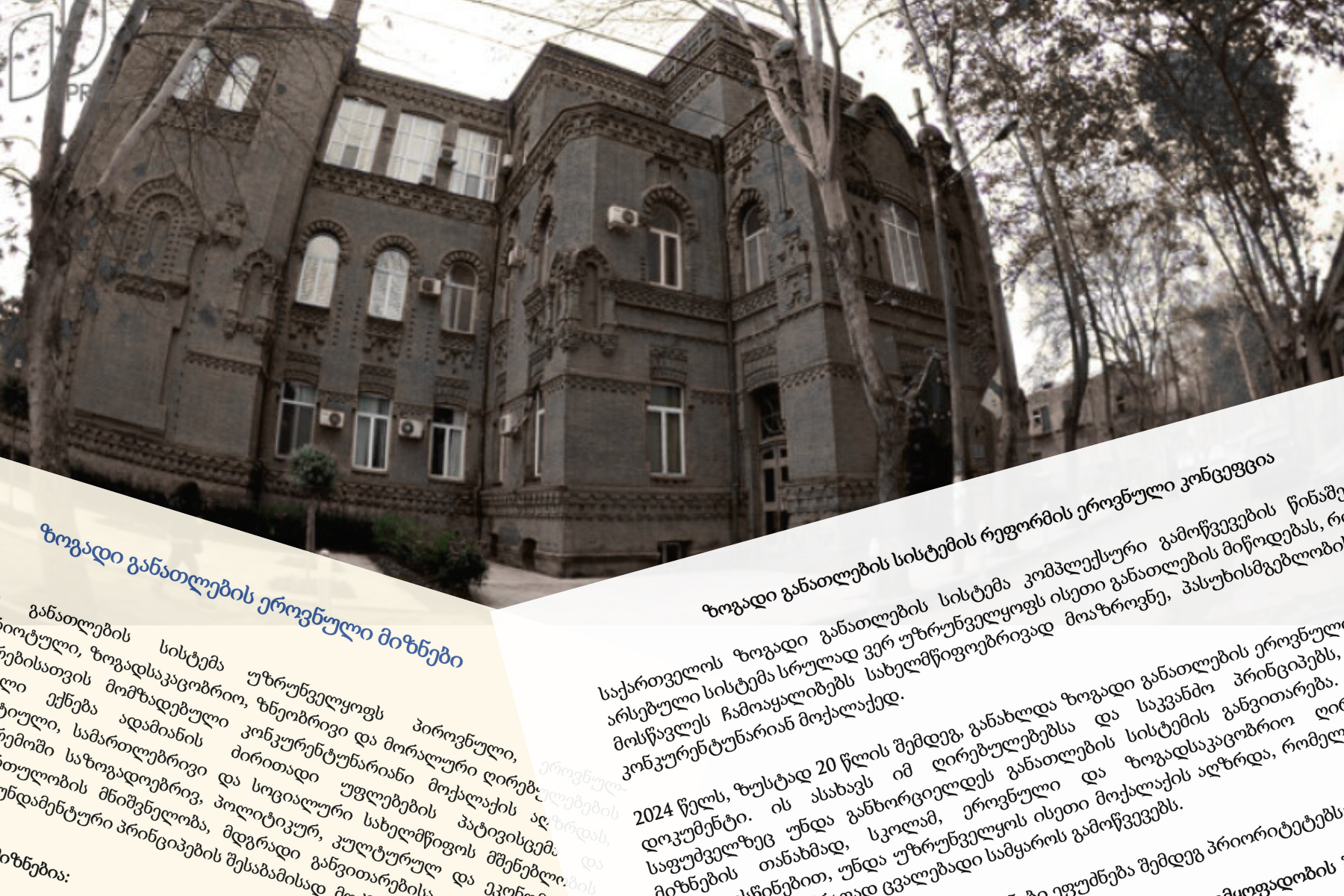
Following the higher education reform, on 2 December 2025, Minister of Education and Science Givi Mikanadze presented the National Concept for Reforming General Education. The reform concept identifies several challenges in general education. These include the “ideological content” of the 2004 National Curriculum, the poor quality of school textbooks, infrastructure, the school financing mechanism, weak links between different levels of education, as well as problems related to teacher qualifications and the inclusiveness of the educational process. Proposed measures to address these challenges include the abolition of the 12th grade, the introduction of standardized textbooks, changes to the school enrollment age, and the abolition of subject-specific exams for teachers.
This article analyzes the proposed solutions to each challenge, their purpose, and their potential effects. It also discusses important problems that have existed in general education for years but have remained beyond the scope of the concept.
Challenge 1: Educational Program Content
As Givi Mikanadze noted at the presentation, the 2004 document on national general education goals was “filled with liberal politics.” According to the Ministry, this “ideological framework” is the first and main problem in general education. It has been argued that, due to overloaded curricula and an emphasis on academic assessment, schools cannot educate a state-minded citizen. To address this problem, the authors of the concept plan to reduce the academic workload and replace it with interactive teaching, as well as to introduce profile-based education at the secondary level. This includes reducing the school cycle to 11 years, establishing a so-called “Repetitorium” in the 11th grade, and making continuation into the 12th grade voluntary.
The National Concept of General Education is based on the National Goals of General Education document, which was adopted in 2024 and creates a kind of framework for what should underpin both the directions of general education reform and the national curriculum and other state documents. The Concept begins precisely with a citation from the 2024 National Goals of General Education document and names the specific national goals on which the reform is based.
The National Concept of General Education is based on the National Goals of General Education document, which was adopted in 2024 and creates a kind of framework for what should underpin both the directions of general education reform and the national curriculum and other state documents. The Concept begins precisely with a citation from the 2024 National Goals of General Education document and names the specific national goals on which the reform is based: “Ensuring the preservation and transmission of national and cultural identity; deep knowledge and respect for the state language, culture, and history.” Neither the National Goals of General Education nor the reform concept mention the quality of general education. In addition, the vague nature of both documents makes it difficult to identify a clear academic framework or measurable goals. The framework for general education reform developed by the authoritative international organization, the Organization for Economic Cooperation and Development (OECD), emphasizes that successful reform requires clearly defined teaching goals that are measurable and comparable over time and across education systems in different countries. The reform should also include mechanisms to protect the general education system from ideological influence in the future. Otherwise, the question arises: if the initial criticism concerned excessive “ideological content,” how will the Ministry of Education ensure, in the absence of such mechanisms, that one ideology is not simply replaced by another?
In addition, the reform concept includes the abolition of the 12th grade, although it does not substantiate the purpose of this decision. While the concept itself provides no justification, in media statements Givi Mikanadze and Irakli Kobakhidze identified several main reasons: 1. Student performance in the 12th grade is low, and students mainly receive education outside school through alternative sources; 2. Inefficient use of state funds; 3. The outflow of young people from the country to pursue education and the resulting increase in migration. During the presentation, Mikanadze noted that school teachers will not have their hourly salary reduced under the conditions of making the 12th grade voluntary, and this will be compensated by other activities in schools. In addition, profile education will be introduced in the 11th grade to prepare students only in the subjects they will take in the Unified National Exams.
The above-mentioned goals and justifications raise the following questions: 1. If the mandatory 12th grade is abolished but teachers’ salaries are not reduced, how will costs be saved? 2. In practice, the 12th grade already functions in much the same way as described: students’ academic workload is reduced, as the teaching of natural sciences ends in the 11th grade, and they therefore focus on exam preparation. Under the proposed change, this workload would simply be shifted from the 12th grade to the 11th grade. Accordingly, if the criticism is that students in the 12th grade do not really study, their performance is low, and the preparatory year is ineffective, how does assigning the same function to the 11th grade address this problem?
Irakli Kobakhidze also cites increasing migration as one of the reasons for the announced change. According to the National Statistics Office of Georgia, 1,149 students went abroad to study in the 2024–2025 academic year, which is 0.6% of the total number of students during the same period. In total, 5,254 students went abroad to study between 2016 and 2024, while 742,895 Georgian citizens left the country during the same period. In addition, these statistics include students at all three levels of higher education (bachelor’s, master’s, and doctoral). Accordingly, the number of students who go directly abroad after graduating from school is even lower. Even if educational migration had a significant impact on overall migration, the proposed concept seeks to address this challenge by restricting applicants’ and students’ freedom of choice. It is therefore unclear how it would solve the supposed “problem.” Accordingly, the limited scope of this specific challenge cited by Kobakhidze cannot serve as a justification for systemic reform.
The voluntary component of the 12th grade raises serious systemic questions. In particular, the concept states that in March of each academic year, a registration database will be opened for the following year for those wishing to study in the 12th grade, although the document does not specify the content or format of instruction at this level. If the national curriculum is defined only up to the 11th grade, it is unclear what the academic workload of the 12th grade will be. In addition, if the 12th grade, like the 11th grade, serves only as a preparatory year, the question arises as to how the state will justify the financial expenditures incurred for this purpose. Finally, if the opening of the 12th grade depends solely on a student’s individual choice, a logical question arises: theoretically, what barrier would prevent the establishment of a 13th grade under the same principle?
If we look at the experience of developed countries, specifically in Europe, there is no common school education policy within the European Union. Each member state determines its own education policy at the national level for both school and other education levels. There are both similarities and differences in the approaches and principles of these countries. The level of school education in European countries exceeds the world average. For example, according to aggregated results from four different harmonized tests, 11 of the top 20 countries with the highest scores are EU member states. Their results are also above average in the OECD Programme for International Student Assessment (PISA) rankings. Accordingly, despite these differences, one factor in general education reform unites the education systems of these countries: a focus on the quality of education.
Despite the absence of a unified policy in general education, the secondary level is not considered in isolation from the higher education system. The European Higher Education Area (EHEA) and the Bologna Process, which operate within it, were created to harmonize the higher education systems of participating countries, facilitate the recognition of qualifications, and internationalize education. Georgia joined the Bologna Process in 2005 at the Bergen Summit. Section V of the Convention on the Recognition of Qualifications concerning Higher Education in the European Region (Lisbon, 1997, ratified by the Parliament of Georgia in 1999) concerns the recognition of qualifications required for admission to higher education. According to this section, each party recognizes the corresponding qualifications of the other party unless a substantial difference is proven between the admission rules of the country issuing the qualification and those of the country where recognition is sought. One of the prerequisites for admission to most universities in European countries is a 12-year secondary school leaving certificate. This was the argument used by the Ministry of Education in 2005 to justify replacing 11-year school education with a 12-year system. Since universities make admission decisions independently, in theory, 11-year school education does not contradict the Bologna Process if a country is among the exceptions where, despite 10–11 years of schooling, the quality of education is above average. It is unlikely that Georgia will be included in this list, as the latest (2022) PISA study ranked it 65th out of 81 participating countries. Consequently, under the proposed reform, students are more likely to face additional obstacles when continuing their studies abroad after completing school. Finally, it should be noted that those working on the reform concept have, to date, not provided any written or verbal justification for why the mandatory 12th grade should be abolished.
Challenge 2: Learning Resources
According to the concept, for 20 years the state has followed a “free market” approach, allowing both publishers and individual authors to produce school textbooks, although many of these textbooks were of low quality. Therefore, the concept states that the “one textbook” principle will be introduced, under which the ministry will take responsibility for creating school textbooks. According to the authors of the concept, this will simplify both the comparability of education quality between schools and the process of mobility and equalization of quality across the country.
During this period, the Ministry of Education has been responsible for the quality of school textbooks through an accreditation system, known as approval. The Ministry developed and established criteria that textbooks had to meet. It then purchased books through a state tender, and schools subsequently chose, on average, 2–3 textbooks to include in their curriculum. Accordingly, the fact that textbooks did not meet the established standards or maintain proper quality primarily reflects not a failure of market mechanisms, but the inefficiency of supply caused by the state’s criteria and regulatory restrictions. Therefore, the issue lies less with the “free market” and more with the management model chosen by the Ministry of Education.
As for the comparability of educational quality and mobility processes, the Ministry itself determines both the curriculum and the tasks assigned to schools. In addition, as noted above, it establishes approval criteria for textbooks. The argument for this management model is that it will facilitate mobility. However, regarding the equalization of quality, a single school textbook cannot ensure uniform quality across schools, as the provision of knowledge depends on many other factors.
The reform document does not define specific, measurable, or transparent criteria for developing new standardized textbooks. Without these measures, there is no mechanism to verify accountability or improvements in quality. How will stakeholders determine whether the quality of textbooks has improved? What mechanism will the Ministry of Education use to identify and address shortcomings?
In addition, the transition to standardized textbooks will further reduce teachers’ autonomy. Under the current system, teachers’ involvement in selecting teaching materials is limited to choosing one of the books proposed by the Ministry of Education. With the reform, this minimal level of involvement would effectively be eliminated. Successful examples of general education reform, such as the Finnish school system, show that within a unified national framework, teacher participation in selecting teaching materials is important for improving the quality of education.
Challenge 3: School Life
According to the concept, another major challenge is the focus on implementing the curriculum and the assessment system of the educational process, which reduces student motivation and pushes them to seek opportunities for self-realization outside school. In response, the Ministry proposes promoting non-formal education and school clubs, as well as thematic gatherings and school camps.
Although non-formal education can have a positive impact on the quality of general education, it is a complement to formal education. Accordingly, attention should first be given to the challenges of formal education. Since there is no domestic mechanism for measuring the quality of school education, it is important to analyze international studies, such as the PISA assessment conducted by the OECD every three years, which evaluates the skills of 15-year-old students worldwide in mathematics, reading comprehension, and natural sciences. Georgia has participated in PISA since 2009. In the most recent 2022 assessment, Georgia ranked 65th out of 81 countries. In 2018, Georgia ranked 70th, although the improvement in ranking was due not to better results, but to declining performance in other countries.
Georgia ranks 60th in mathematics with a score of 390, 66th in natural sciences, and 67th in reading comprehension. Among post-Soviet and neighboring countries, Georgia has one of the highest shares of students, 66.4%, who fail to reach the basic proficiency level in mathematics. The corresponding figures are 67% in reading comprehension and 65% in natural sciences, placing Georgia behind all post-Soviet countries except Azerbaijan and Uzbekistan.
In a context where Georgia performs poorly in international assessments and lacks effective domestic mechanisms for measuring student knowledge, such as school examinations, focusing primarily on extracurricular activities and camps appears to divert attention from the core problem. The concept also does not specify where and at what cost financial and administrative resources will be allocated in public schools to establish various clubs.
When a reform concept does not propose clear steps to improve the quality of education, it creates the impression that the goal of the reform is not to enhance quality, but to mask existing systemic shortcomings with other, more “popular” topics. This, in turn, further distances schools from their primary mission: providing students with a competitive and high-quality education.
Challenge 4: Links between Educational Levels
One of the challenges identified by the reform is the weak link between levels of education, particularly between preschool and primary education. The concept proposes addressing this by strictly defining the age requirement for first graders: only children who turn six by September 15 would be eligible to enter first grade.
Changes related to school entry age were also introduced into the law at the end of 2023. Under this amendment, in the 2025–2026 school year, children who turn six by December 31 would be able to enter first grade. Under the same amendment, in the 2024–2025 school year, children who turn six by December 1 were eligible to register for first grade. Earlier, in 2023, another change was introduced: in the 2023–2024 academic year, children who turned six by November 1 were registered in first grade. According to the Ministry, “the decision was based on numerous applications from citizens requesting a revision of the norm regulating the age of entry into primary education in Georgia.” In the 2022–2023 school year, only children who turned six by October 1 could enter first grade, while for several years prior the deadline had been September 15. As in the previous cases, the concept presents the three-month change as a way to simplify the transition between levels of education, but does so without providing a substantiated justification.
A child’s age cannot be the sole indicator of readiness for school. In countries with successful education systems, such as Finland, preschool education is based on two main principles: compulsory early childhood education (ECE) and developmental assessment schemes. In Georgia, preschool education is not compulsory and, even universality is not ensured. Accordingly, if the Ministry aims to simplify this transition and bring the two levels closer together, it would be appropriate to create additional incentives for parents to enroll their children in preschool institutions. In this context, it is also unclear how this change will affect children who do not attend preschool at all, aside from the fact that their right to enter school will be restricted by the new age requirements.
If the goal of the concept’s authors is to improve the quality of general and preschool education and to simplify the transition process, this would require changes to preschool programs, retraining for educators, and, most importantly, the establishment of standards defining the minimum knowledge and skills children should have before entering first grade.
Challenge 5: Teacher Qualifications
According to the reform, the main problem related to teachers is the imbalance in staffing: there is an oversupply in certain areas and a shortage in others. In addition, existing programs for teacher development and retraining fail to meet long-term needs, as they are not based on labor market analysis. The concept proposes a new model of professional development for teachers to address this challenge. To overcome regional imbalances, the Ministry, based on labor market research, will determine how many teachers will be needed in each region and school subject over the next five to ten years.
Beyond stating that a new professional development model will be created to improve teachers’ qualifications, the concept does not specify what this model will entail, whether it will have clear objectives, whether it will aim to address staffing surpluses and shortages, or whether it will pursue other goals. It is also unclear how a labor market survey, which is descriptive in nature, will resolve the problem of imbalance.
One of the fastest-growing and most permanent programs in the education budget is the Teacher Enhancement and Qualification Improvement Program. Over the years, hundreds of millions of GEL have been spent in this area. In Georgia, teacher certification exams were introduced in 2010 with the aim of improving teachers’ training and qualifications.
Although passing a certification exam is an important prerequisite for a salary increase, as of 2017 only 30% of teachers had passed at least one certification exam. Between 2010 and 2017, 75% of teachers who took certification exams failed to reach the minimum threshold in their subject.
In 2022, 10,846 teachers took the professional skills exam, and only 2,640, or 24%, met the threshold. By comparison, in 2021, 46% of teachers passed the subject competency test and 43% passed the professional skills test. These were the results despite the Ministry of Education allocating more than 10 million GEL to the Teacher Professional Development Support Program in both years.
According to a report by the Center for Civil Integration and Inter-Ethnic Relations, the probable impact of election cycles on the teacher certification and professional development program is also evident. The policy announced before the 2012 parliamentary elections, which aimed to simplify teacher certification, was clearly reflected in the statistics. While 1,147 teachers passed the exam in 2010 and 2,500 did so in 2011, this number rose to 8,000 in the election year. This means that 2.5 times more teachers were certified in one year than in the previous two years combined. Overall, more than 52% of the 15,387 teachers certified between 2010 and 2015 obtained or upgraded their status in 2012.
The subsequent election cycle in 2016 again influenced teachers’ career progression schemes. The changes introduced in 2015–2016 focused not on improving competence, but on retaining existing staff in the system. As a result of the reform, 77% of teachers were automatically assigned to different categories. Status advancement became possible even with only a 30% score in the subject exam, and the professional skills exam was replaced by a credit accumulation system. At the same time, uncertified teachers were granted the status of “practitioner,” and their period of employment within the system was extended several times.
Another significant wave of status upgrades coincided with the 2020 parliamentary elections. In 2019–2020, 23,360 teachers became “senior teachers.” Between 2015 and 2020, a total of 33,039 practitioners upgraded their status, 70.7% of whom did so during the 2019–2020 election period. The scale of this trend was such that the promised salary increase was postponed until the following year. Due to the pandemic, in 2020 the right of practitioner teachers to remain in the system was extended until the end of 2022, which effectively eliminated personnel changes due to insufficient qualifications.
With the 2024 elections approaching, the simplification of procedures has again come onto the agenda: exams for lead and mentor teachers have been temporarily suspended, portfolio-based assessment has been revised, and the policy linking salary supplements to status has changed. An additional 160 million GEL has been allocated to increase base salaries by 2024, once again indicating the influence of the election cycle on the management of the education system.
The persistently poor results in teacher certification exams since 2010 provide grounds to conclude that the existing competency development program cannot adequately address the problem of unqualified teachers. Findings on how these programs are connected with the election cycles raises further questions about their underlying purpose.
Challenge 6: Learning Environment
“The infrastructure policy is not limited to the construction or rehabilitation of new schools… The implementation of a consistent, annually planned policy for the construction and rehabilitation of schools will continue. A basic modern infrastructure standard will be established in schools, which includes fully equipped laboratories, well-functioning sports infrastructure, libraries, catering facilities, well-equipped spaces for informal education, and a fully adapted environment,” the concept declares.
About a month before the publication of the concept, students and parents held a demonstration and blocked Tsotne Dadiani Street in Tbilisi, where the building of Public School N10 used to be, demanding the completion of the school’s construction. Since 2019, about 1,400 students and teachers have been transferred to Public School N22, where a separate wing was allocated for students of Public School N10. According to the Ministry of Education, the construction of Public School No. 10 will be completed a year later, in 2027. However, a few days before the protest, in October 2025, the ceiling of School N22, which is itself a dilapidated building, collapsed, causing the school to be closed for a week. After the active involvement of parents, students and teachers were forced to leave both wings of the school. Following this, the Ministry decided to relocate the students of Public School N10 to Public School N190, offering them the option to study in the second shift, which led to two days of protests. Later, the Ministry allocated an alternative space for the students at Eastern European University, and classes resumed on November 3.
According to an article published by FactCheck, a there is a similar situation in public schools in Adjara: of the six schools planned for construction, five remain unfinished, and as a result, the school year began with delay for students in these schools. In addition, of the 51 schools in need of rehabilitation, work has not yet been completed in 31. The Ministry of Education launched the school construction and rehabilitation program in 2022, and for the period 2022–2026, a total of 80 schools were planned for construction and 720 for renovation.
According to the 2024 report of the Center for Civil Integration and Inter-Ethnic Relations (CCIIR), which covers 1,561 public schools, or 75% of the total 2,086 public schools, 59% of schools require full or partial rehabilitation or renovation, 28% of schools are newly built, renovated, or rehabilitated, and 9% of schools are slated for renovation, rehabilitation, or construction. The situation also varies by region. For example, the share of rehabilitated or renovated schools is high in Tbilisi (51%) and low in Samegrelo–Zemo Svaneti, Guria, Racha–Lechkhumi, and Kvemo Svaneti (11–12%).
Regarding laboratories, the internet, and other types of school infrastructure, the report shows that out of 1,450 public schools, only 31% have a science laboratory, 64% do not, and the remaining 5% have either a virtual/computer science laboratory or outdated laboratories that are not actively used. Regional disparities are also evident: approximately 80% of schools in Tbilisi have some type of science laboratory, while 87% of schools in the Racha-Lechkhumi and Kvemo Svaneti, Guria, and Mtskheta-Mtianeti regions lack any laboratory, whether new, outdated, or virtual.
Computers, the internet, and printers are formally available in most schools: 87% have the necessary equipment, and 90% have Internet access. However, due to poor quality, in many schools the internet is almost unusable for learning or administrative purposes. Although the majority of schools are statistically equipped with this technology, in several municipalities, such as Lanchkhuti, Chkhorotsku, Dmanisi, Sighnaghi, Chiatura, and Khelvachauri, certain schools still faced issues with access to computers, printers, and the internet, according to 2024 data.
Regarding school meal programs, the government has been talking about introducing free meals in public schools for six years, but there is still no concrete action plan. In December 2025, Givi Mikanadze told the media that it is “premature” to discuss free meals in schools. In 2021, then-Minister of Health Ekaterine Tikaradze noted that the Georgian Dream party had been working on a free lunch program for schoolchildren for the past two years. The then-Minister of Education, Mikheil Chkhenkeli, also spoke about this. Later, the pre-election promise of free school meals was repeatedly voiced by former Minister of Education Giorgi Amilakhvari. In 2024, Irakli Kobakhidze announced his personal involvement in the process. Nevertheless, six years later, the lack of appropriate infrastructure in schools is still cited as the main reason for the project’s delay.
In addition to the large-scale USD 1 billion project announced in 2022, which aimed to build 80 schools and rehabilitate 720 schools, the budget annually allocates funds for infrastructure, school equipment, and nutrition programs. In this regard, the challenge is not the absence of projects, but problems with enforcement and implementation. It is therefore unclear how the newly announced reform can include obligations that the Ministry of Education has been taking on for years but failing to fulfill, especially considering that the reform itself implies change.
Challenge 7: Inclusiveness of Learning Process
According to the concept, the main challenge of inclusive education is the shortage of qualified personnel and the fragmentation of professional support mechanisms. To address these issues, it is planned to institutionalize the training of specialists and make inclusive approaches a necessary competence for all teachers, especially primary school teachers. In addition, to mitigate the visible manifestation of social and economic inequality, the reform envisages the mandatory introduction of school uniforms in primary grades.
The proposed approach to solving the problem raises questions about implementation and the correctness of priorities. In the field of inclusive education, identifying the lack of specialists as the main challenge and addressing it by changing the “pedagogical standard” and retraining teachers carries the risk of devaluing professional expertise. Specialized therapeutic support, (such as that provided by psychologists and speech therapists) cannot be replaced by general pedagogical education. This is especially true in Georgia, where, due to teachers’ workloads and the large number of students in classes, it is physically impossible for one teacher to fully address individual needs. Accordingly, delegating this responsibility to teachers does not appear to be a step toward improving quality, but rather an attempt by the Ministry to compensate for the shortage of qualified personnel.
Even more controversial is the introduction of compulsory school uniforms as a means of overcoming social inequality. School uniforms will not solve this problem, as for students, social status is still expressed through items such as technological devices and accessories. Moreover, in a country with high rates of child poverty, the obligation to purchase a uniform, if it is not fully subsidized by the state, may become an additional financial burden and a barrier for the most vulnerable groups.
Attempting to address the issue of inclusivity by introducing compulsory school uniforms and vaguely expanding teachers’ responsibilities gives the impression that the state is focused on managing symptoms rather than eliminating the systemic inequalities that affect the quality of education and the fair distribution of resources.
Challenge 8: Management and Funding System
According to the reform document, the existing voucher financing system is based solely on the number of students and cannot cover the real needs of schools, which is why many of them operate with minimal resources and weak professional support. To address this, it is planned to improve the financing model and institutionally strengthen educational resource centers. The authors of the reform also emphasize the importance of increasing parents’ involvement in school management, which will be reflected in meetings with representatives of the Ministry of Education starting in 2026.
Since 2005, a voucher financing system has been implemented in Georgia as part of a broad educational reform. According to the 2005 Law on General Education, a voucher is a financial instrument allocated by the state to a student and used to finance his or her education.
The introduction of this system had several main goals: (1) Freedom of choice: parents were given the opportunity to choose a school of their preference and use the state-issued voucher accordingly; (2) Competition and quality: competition between public and private schools was intended to encourage improvements in the quality of school education; (3) Equal and transparent funding: prior to the voucher system, funding was unequal and dependent on school management. Similar types of schools received different levels of funding, placing students in unequal conditions.
Georgia opted for a universal funding model, which meant financing all students regardless of whether they studied in private or public schools. Initially, the voucher amount was the same for both types of schools. If tuition fees at a private school exceeded the voucher amount, parents covered the difference from their own funds. In addition, to receive funding, schools were required to undergo the relevant licensing and authorization procedures of the Ministry of Education and Science (Chapter 3, Article 22).
The rules for financing general education institutions are defined by Ordinance N476 of the Government of Georgia, dated 14 September 2015, which has been amended 13 times to date. This document establishes the per-student financial norm and the corresponding voucher amount for schools with 170 or more students. For schools with small enrollments, from 1 to 169 students, funding is calculated based on the hourly workload of the national curriculum, as well as administrative and other costs. However, in this case, the specific criteria and coefficients used to determine their budgets remain vague.
To assess the effectiveness of the voucher financing system, it is important to have statistics on the proportion of schools financed through this system. According to 2014 data, 61% of public schools had enrollments ranging from 1 to 169 students; therefore, their funding fell outside the voucher system. Neither the new concept nor other publicly available statistical sources provide information on how this indicator has changed since then.
In addition, when evaluating the voucher model, it is important to consider which socio-economic and political goals were set for a particular model. The indicators of success for voucher models implemented in different countries vary. For example, a school voucher financing model focused on ensuring equitable access to state resources may not be as effective for addressing corruption and increasing efficiency as a model specifically designed for those purposes. The concept does not provide any specific framework or clearly defined challenges in this regard.
The solution proposed in the concept is even more vague. The authors respond to the challenges associated with the voucher model by strengthening educational resource centers. “The resource center will be established as a professional support center that provides school principals and teachers with consultation, mentoring, and practical problem solving.” Accordingly, the resource center will not only be a source of funding for public schools but, in many cases, also a participant in school management. This will further increase public schools’ dependence on these centers and, consequently, reduce the existing level of autonomy.
As for strengthening the role and involvement of parents, the authors of the concept argue that direct meetings with parents starting in 2026 will increase their engagement. Aside from the fact that this approach is superficial, the same concept includes provisions that clearly reduce the role of parents as stakeholders, such as tightening age limits for students and restricting first-grade enrollment based on territorial criteria.
The document also fails to establish accountability mechanisms for how school funding will be calculated under the new model or what impact it will have. There is no clearly defined funding framework that explains how the resources allocated to schools will be used. How will the Ministry assess the effectiveness of funding? How will it distinguish schools with additional needs from those that use existing resources inefficiently? Issues related to fiscal accountability remain completely unanswered in the concept.
Conclusion
The challenges and solutions outlined in the General Education Reform Concept, such as the abolition of the 12th grade, the “one textbook principle,” non-formal education, the elimination of teacher certification exams, changes to the retraining program, and revisions to the school financing model, raise serious questions about their actual objectives. The proposed concept does not adequately address the real challenges facing the education system and does not seem to be focused on improving the quality of education in schools.
The example of higher education reform demonstrates that before a concept becomes law, only formal steps are taken. The concept itself remains largely theoretical and is not accompanied by meaningful public discussion or supporting explanatory documents based on research. As a result, it is unlikely that the public will receive clear information about the specific measurements behind these initiatives or how the quality of education is expected to be improved.
In addition, some components of the general education concept, such as the arrangement of school infrastructure, fall within the Ministry’s routine responsibilities. It is therefore unclear why part of the reform consists of measures that were already included in manifested policies, since the fact that these measures have been implemented ineffectively in the past does in fact highlight a systemic failure.
For the complete document, including relevant sources, links, and explanations, please see the attached file.
Gallery
