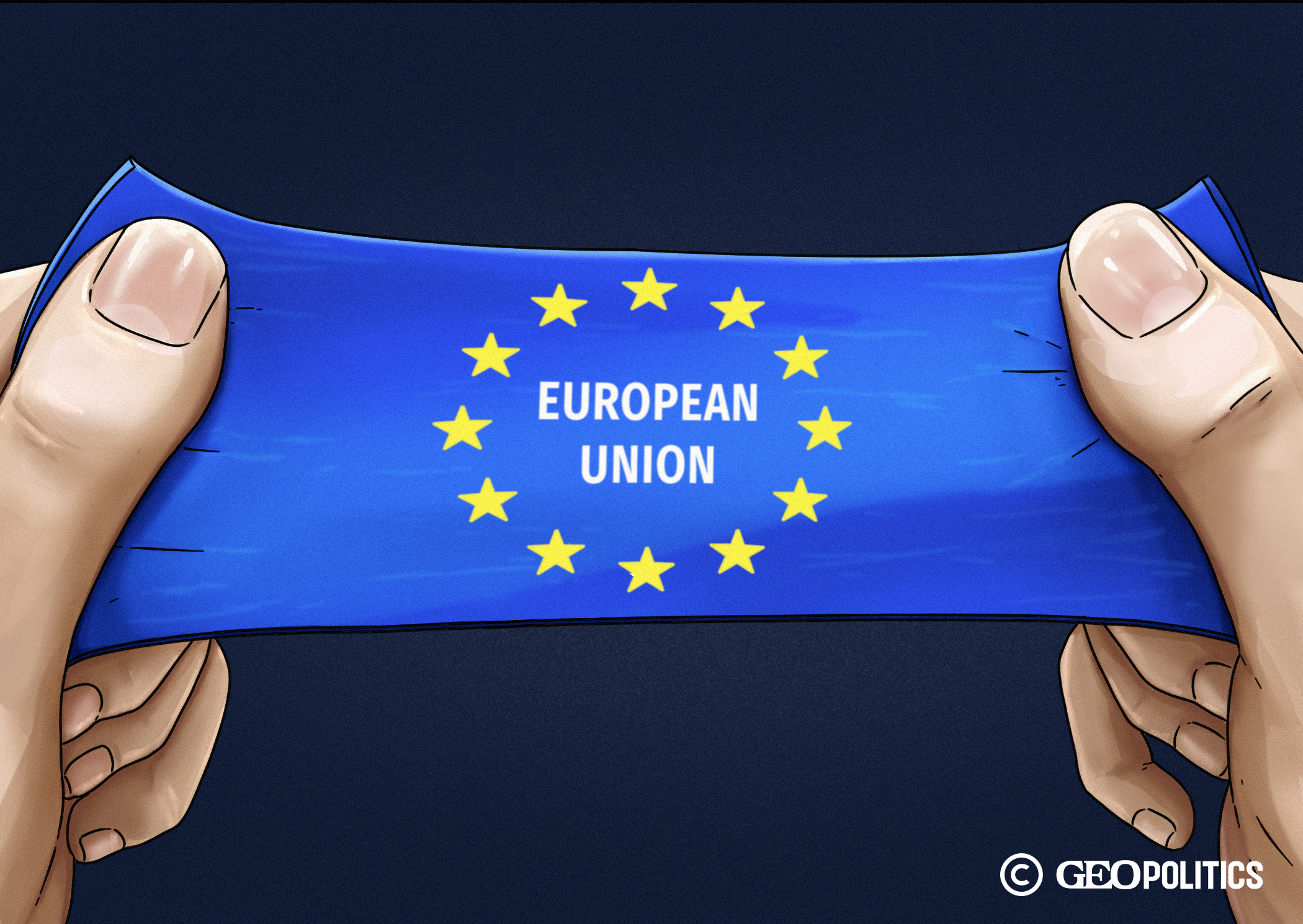

Different Models of the European Union's Enlargement Policy
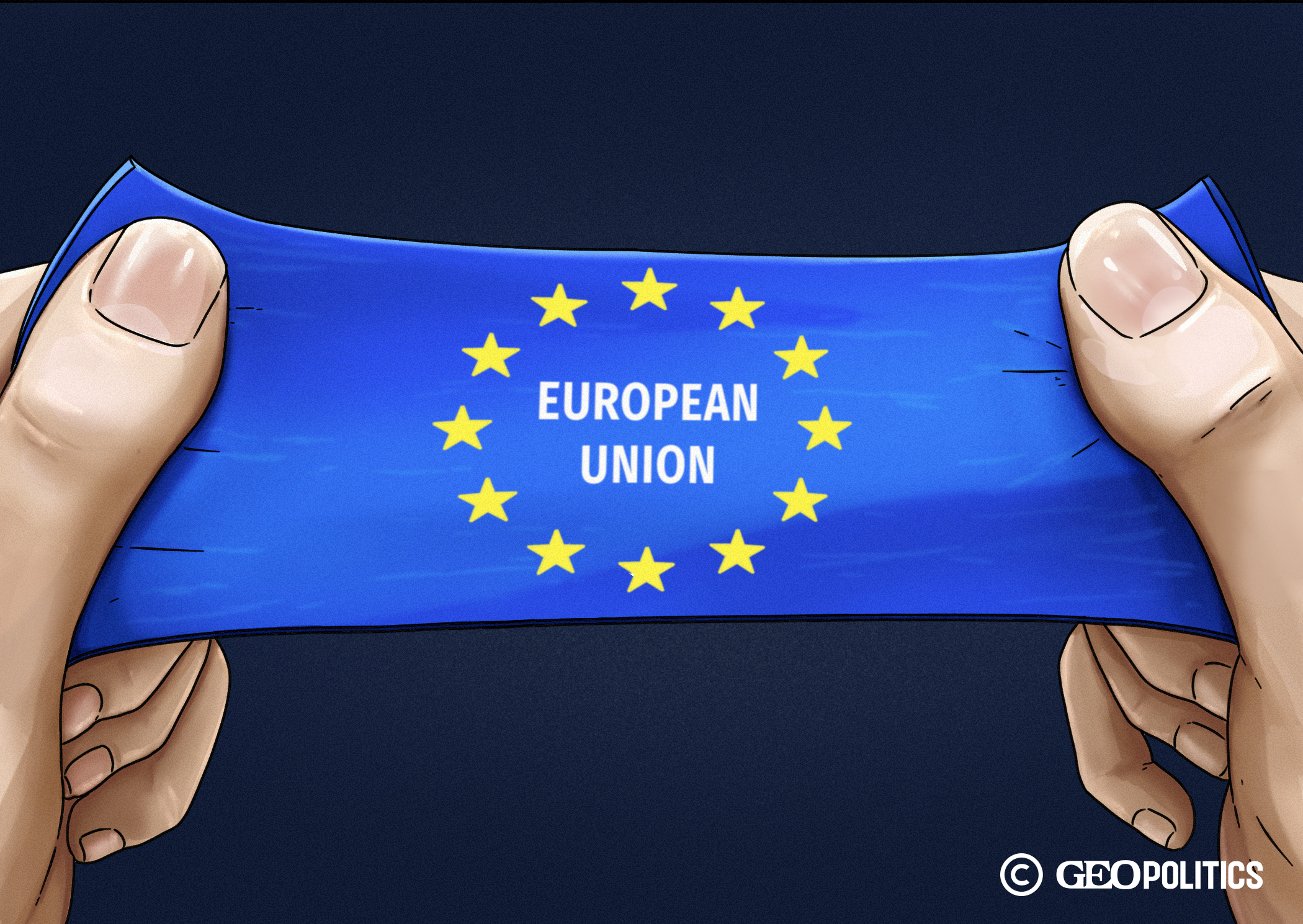
illustration: GEOpolitics
Introduction
In 2020, the EU revised its accession methodology, resulting in significant changes to the enlargement policy procedures. The aim of the new methodology was to increase the credibility, predictability, and dynamism of the enlargement process and to place it under stronger political governance. However, the European Commission stressed at the time that the updated methodology did not change the existing Copenhagen criteria for accession or the conditions set out in the EU treaties. The changes concerned not the membership requirements, but the organization and management of the accession process itself. Four main innovations were introduced in practice: First, the negotiation chapters are no longer considered individually but are instead grouped into six thematic clusters. Second, the methodology provides for more active involvement of Member States and EU political leaders. Third, it aims to increase the predictability of the process. Under the conditions of successful implementation of reforms, candidate countries can gradually integrate earlier into EU markets, programs, and various policies. Fourth, the updated methodology elevated the status of public administration reform. While this issue had previously been considered a relatively secondary area, it has become one of the fundamental grounds for membership, alongside the rule of law and economic criteria.
The revised accession methodology adopted in 2020 was developed in the context of the EU's enlargement policy towards the Western Balkans. Following Russia's full-scale invasion of Ukraine in 2022, the EU made the enlargement process a strategic priority and accelerated it accordingly. In June 2026, European Council President Antonio Costa and European Commission President Ursula von der Leyen described the launch of accession negotiations with Ukraine and Moldova as recognition of the determination and efforts demonstrated by these countries. However, they also noted that, in the context of increasing global uncertainty, deeper integration is in the common interest of the entire EU. Earlier EU documents expressed this approach even more explicitly, describing the new wave of enlargement as a "geostrategic investment". At the same time, the European Commission has sought to keep the accession process merit-based.
However, some EU member states oppose the rapid accession of candidate countries for two main reasons: (1) the additional burden on the EU budget, especially in the case of Ukraine, and (2) the emergence of another country with veto power over important EU decisions. It is in this context that three distinct, but mutually exclusive, concepts have come to the forefront: Gradual Integration, Two-tier Membership, and Associate Membership, which are discussed in detail in this paper.
Gradual Integration
Gradual integration implies gradual access to various EU policies, funding, and the single market for candidate countries on a sectoral basis while accession negotiations are still ongoing. This mechanism operates within the framework of the current accession methodology, and its realization depends on the successful implementation of reforms. In June 2022, the European Council officially recognized gradual integration as an approach. Since then, the European Commission has translated this concept into concrete instruments. Of particular note is the Growth Plan for the Western Balkans, presented by Ursula von der Leyen in 2023, which provides pre-accession financial support and accelerated access to certain segments of the single market for candidate countries in the region. In return, the EU requires candidate countries to implement intermediate reforms. In addition, EU Commissioner for Enlargement Marta Kos has repeatedly referred to “accelerated gradual integration” with Ukraine, under which Kyiv would gradually gain access to various EU policies, funds, institutions, and markets, sector by sector. Each subsequent stage would depend on the successful implementation of specific reforms.
Gradual integration addresses one of the structural problems of the accession process: the traditional “all or nothing” model, in which a country moves from candidate status to full membership only at the final stage, creates years of uncertainty without providing relevant benefits. This situation discourages candidate countries from implementing difficult reforms.
It is widely believed that early participation in EU programs helps candidate countries become more familiar with EU practices. At the same time, it reduces the risks that insufficiently prepared new members may pose to existing members, as institutional integration is not achieved all at once, but rather through a gradual process. However, critics fear that the same mechanism could become a justification for permanent limbo. In their view, gradual integration could leave candidate countries in an indefinite interim or waiting state if it is perceived as an alternative to full membership.
Ultimately, gradual integration remains a controversial issue, as its main advantage, namely creating faster and more tangible incentives for reforms, is inseparable from its main risk: partial access could become a final destination rather than a transitional stage towards full membership for both the populations of candidate countries and their political elites. It cannot be ruled out that this circumstance could slow down the reform process.
Two-tier Membership
Two-tier membership is not yet official EU policy, but it is actively under discussion. As POLITICO reported in January 2026, the European Commission was preparing a plan in which a candidate country would join the EU without full voting rights initially, particularly in areas like foreign policy. The goal of this model is to prevent new member states from using their veto power to block critical decisions, such as imposing sanctions. Full voting rights would then be granted once the EU reforms its decision-making system. This approach differs from the model discussed in the previous chapter: gradual integration involves benefits granted prior to membership, whereas two-tier membership sets forth a country's rights upon joining the EU.
The proposal responds to a specific concern: admitting new countries could further strain the already overburdened, unanimity-based decision-making system used for sanctions, foreign policy, and enlargement itself. Under the current setup, a single member-state government can block decisions for the entire EU, as Hungary has repeatedly done regarding Ukraine's accession process and financial support.
Reactions from candidate countries have been mixed. Albanian Prime Minister Edi Rama openly supported the initiative, stating that Tirana would even agree to not send its own representative on the European Commission for a period of time. In his view, France and Germany should maintain their leadership roles within the EU. Moldova has taken a more cautious stance. Moldovan authorities stated they will reserve final judgment until they review the specifics, but emphasized that the ultimate goal remains full membership with equal rights. Ukraine has expressed the strongest opposition, with President Volodymyr Zelenskyy asserting that EU membership "must be full-fledged." Montenegro, the most advanced candidate in the enlargement process, has also been skeptical. Montenegrin President Jakov Milatović noted that the EU functioned successfully with 28 members before Brexit, asking why that same number should present a problem today.
The plan remains under development. EU Commissioner for Enlargement Marta Kos stated that the initiative will undergo a legal review to ensure compliance with the EU's founding treaties before being presented to member-state leaders.
The EU does have precedents for transitional restrictions. For example, following the 2004 enlargement, the free movement of workers from new member states was limited for up to seven years in certain countries. However, those limitations applied to specific policy areas for a clearly defined timeframe. Restricting new members' institutional voting rights for an indefinite period could significantly undermine the very substance of EU membership.
It is worth noting that, despite its potential benefits, two-tier integration risks creating first and second-class member states within the European Union.
Associate Membership
Associate membership is an initiative that Germany has actively supported. The concept did not originate with the German Chancellor's letter of May 18, 2026, although that letter did place the idea on the EU's active political agenda. Associate membership implies creating an entirely new political status rather than having a candidate country join the European Union outright. This model serves as a distinct legal mechanism outside the standard accession process. Under this status, a country would not hold voting rights, but it would have the opportunity to participate in European Union institutions. Crucially, associate membership would not replace ongoing accession negotiations; it would exist alongside them.
In 2003, when the European Commission launched the European Neighborhood Policy, then-Commission President Romano Prodi offered neighboring countries almost all the practical benefits of integration, short of participation in EU institutions. For Ukraine, Moldova, and Georgia, this offer, along with its successor, the Eastern Partnership, proved insufficient. Neither framework provided a credible path to EU membership, and all three countries ultimately favored full association agreements over the relatively limited neighborhood format initially proposed by Brussels. An even more striking example was the long-standing attempt by Germany and France to offer Türkiye a "privileged partnership" instead of full membership. Ankara categorically rejected the proposal, viewing it as an attempt to relegate the country to permanent, second-class status despite having already launched formal accession negotiations.
Specifically, Merz's proposal envisages that Ukraine would participate in meetings of the European Council and the Council of the European Union; have its own European Commissioner, although without voting rights; be represented by non-voting members in the European Parliament; participate in selected EU programs; gradually align with EU law; be subject to safeguards in the event of setbacks in democratic development; deepen security and defense cooperation; and benefit from a political commitment by member states to invoke Article 42.7 of the Treaty on European Union which mandates mutual assistance in the event of armed aggression against Ukraine.
Berlin emphasizes that this initiative should not be viewed as an alternative to membership. From Germany's perspective, its purpose is to integrate Ukraine further into the EU while formal accession negotiations continue in parallel.
The European Commission's official reaction to the initiative was cautious but supportive. The Commission confirmed receipt of Merz's letter and welcomed member states' active engagement in making EU enlargement a reality. At the same time, the Commission stressed that any new model must remain consistent with the merit-based principle of the existing accession process.
Although EU member states are considering granting Ukraine associate membership, no such category currently exists in EU law. Even closely integrated non-member states, such as Norway, have never possessed genuine decision-making power.
The riskiest element of the proposal is linking Ukraine to the EU's mutual defense clause. Because this clause legally applies only to full EU members, any security guarantees offered to Ukraine at this stage represent a political statement rather than an actual possibility. Moreover, formally activating it during the ongoing war with Russia risks drawing the EU directly into the conflict. Volodymyr Zelenskyy has categorically rejected the idea, asserting that Ukraine requires full membership and real voting rights, particularly now that Hungary has lifted its veto.
Merz's proposed model is ambitious, but unrealistic at this stage. It could, however, be considered viable if it were explicitly temporary and included more realistic terms for security cooperation.
Pros and Cons of Three Models of Integration
Gradual integration is the most tested and institutionally established of the three models. It has held official status since 2022 and has been translated into concrete instruments by the European Commission. This track record makes gradual integration far more realistic than two-tier or associate membership, both of which remain at the discussion stage. However, this very advantage highlights its primary drawback: the mechanism does not provide binding deadlines or an automatic transition from one stage to the next. As a result, the EU retains the right to postpone final membership indefinitely, even if a candidate country successfully implements all required reforms. Ultimately, the true value of gradual integration will depend on whether the EU attaches firm deadlines and clear guarantees to the process.
Two-tier membership addresses the risk that the EU's unanimity-based decision-making system could become completely paralyzed following the accession of a large new state. In its current form, however, two-tier membership rests on two weak foundations. First, its implementation hinges on reforming the EU's decision-making system - a process that would require treaty changes and, consequently, the unanimous consent of all member states. This effort could drag on for years or fail entirely, thereby postponing the entry into force of the two-tier model indefinitely. Second, as noted above, the transitional restrictions applied during the 2004 enlargement (such as labor market access) had clear deadlines and a specific scope, whereas the two-tier model limits institutional voting rights indefinitely. Therefore, the model will only be politically viable if a firm deadline for the full restoration of voting rights is enshrined in the accession treaty and kept separate from the success of internal EU reform.
The advantage of associate membership over gradual integration and two-tier membership lies in its speed and independence. Unlike the two-tier model, which requires amending EU treaties and securing the unanimous consent of all member states, associate status can be implemented through a political decision without formal treaty revision, making it far quicker to execute. Furthermore, compared to gradual integration, which primarily offers candidate countries access to markets and funding, associate membership provides deeper institutional involvement, including a dedicated European Commissioner, representation in the European Parliament, and participation in the European Council, albeit without voting rights. However, these very features give rise to its principal weaknesses: (1) Unlike the previous two models, associate membership is not formally a pathway to full membership at all. It is a parallel, standalone status that, as historical precedents suggest (such as the European Neighborhood Policy and Türkiye's "privileged partnership"), risks becoming a final destination rather than a transitional stage; (2) Unlike the two-tier model, which relies on an imperfect yet established legal foundation (treaty reform regarding unanimity), associate membership does not exist as a distinct category under EU law, introducing significant legal ambiguity; (3) Linking an associate member - in this case, Ukraine - to Article 42.7 exposes the model to political and security risks that are not present in either gradual integration or two-tier membership.
Where does Georgia Stand in this Discussion?
Georgia's trajectory clearly demonstrates what happens when a candidate country withdraws from active efforts towards EU membership. Georgia was granted candidate status in December 2023, but this was contingent on implementing nine key reforms outlined in a European Commission report and approved by the Council of the EU. Unlike Ukraine and Moldova, Georgia failed to officially open accession negotiations. By October 2024, the European Council concluded that the Georgian government's actions had effectively halted the accession process. Subsequently, the Georgian government announced it was suspending EU accession talks through 2028.
The situation has not improved since. By the end of 2025, the EU concluded that Georgia's accession process had reached a "complete standstill." The European Commission's November 2025 enlargement report offered an even harsher assessment, describing Georgia as a "candidate country in name only." These evaluations were accompanied by concrete measures. Beginning in mid-2024, the EU froze bilateral financial assistance to the Georgian government, and in January 2025, the Council of the EU suspended elements of the EU-Georgia visa facilitation agreement for diplomats and civil servants.
However, this does not mean Georgia should be considered a lost cause. The critical factor remains the sharp contrast between government policy and public sentiment. Independent polls consistently show that the vast majority of the Georgian public strongly supports EU membership, even as the government steers the country in the opposite direction. For this reason, the Council of the European Union continues to stress that halting the accession process is not a final decision, and the door to the EU remains open should the Georgian government reverse its current political trajectory. Formally, Georgia's candidate status has not been revoked. In practice, however, the country is almost entirely sidelined from active discussions on gradual integration, two-tier membership, and associate membership, as all three models rely on the fundamental premise that a candidate government is actively implementing EU-required reforms.
***
The EU's enlargement policy no longer follows a single, standardized path to membership. Instead, it has fragmented into several distinct models that respond to different challenges while sharing a common logic: each offers candidates or member states quicker benefits than the traditional accession process allowed. In return, however, the clarity, fairness, and legal foundation of these processes are called into question. Gradual integration provides the most immediate practical results but the most ambiguous outcome; two-tier membership offers the clearest institutional status but the hardest political path to achieve it; and associate membership delivers the fastest start to integration, yet carries the most demanding political conditions and a weak legal basis.
Each of these proposals has met with mixed reactions and carries distinct risks. Albanian Prime Minister Edi Rama expressed support for two-tier membership, whereas Ukrainian President Volodymyr Zelenskyy, Montenegrin President Jakov Milatović, and Moldovan leadership have made it clear that eventual membership must be full and equal. They contend that this model risks permanently entrenching a system of "first-class" and "second-class" members within the EU. Associate membership faces similar skepticism, compounded by the fact that it would bind Ukraine to the EU's mutual defense clause (Article 42.7) while the war with Russia continues. This commitment remains legally weak and politically extremely sensitive, which is why Zelenskyy rejected this option as well. These varying positions demonstrate that no single model is universally acceptable or unacceptable among candidate countries.
The case of Georgia illustrates this discussion from a different perspective. Although Georgia received candidate status in 2023, its accession process has been effectively frozen since October 2024. Despite strong support for EU membership among the Georgian public, the country remains excluded from all three integration models, as each relies on the active commitment of a candidate government to implement EU-required reforms - a process the Georgian government has openly postponed until at least 2028. In this respect, Georgia's trajectory underscores that all three models, despite their differences, are designed strictly to make the accession process faster and fairer for candidate countries that demonstrate genuine political will and readiness to join the EU.
For the complete document, including relevant sources, links, and explanations, please see the attached file.
Gallery